
Chris Golias, PhD, NMFIT
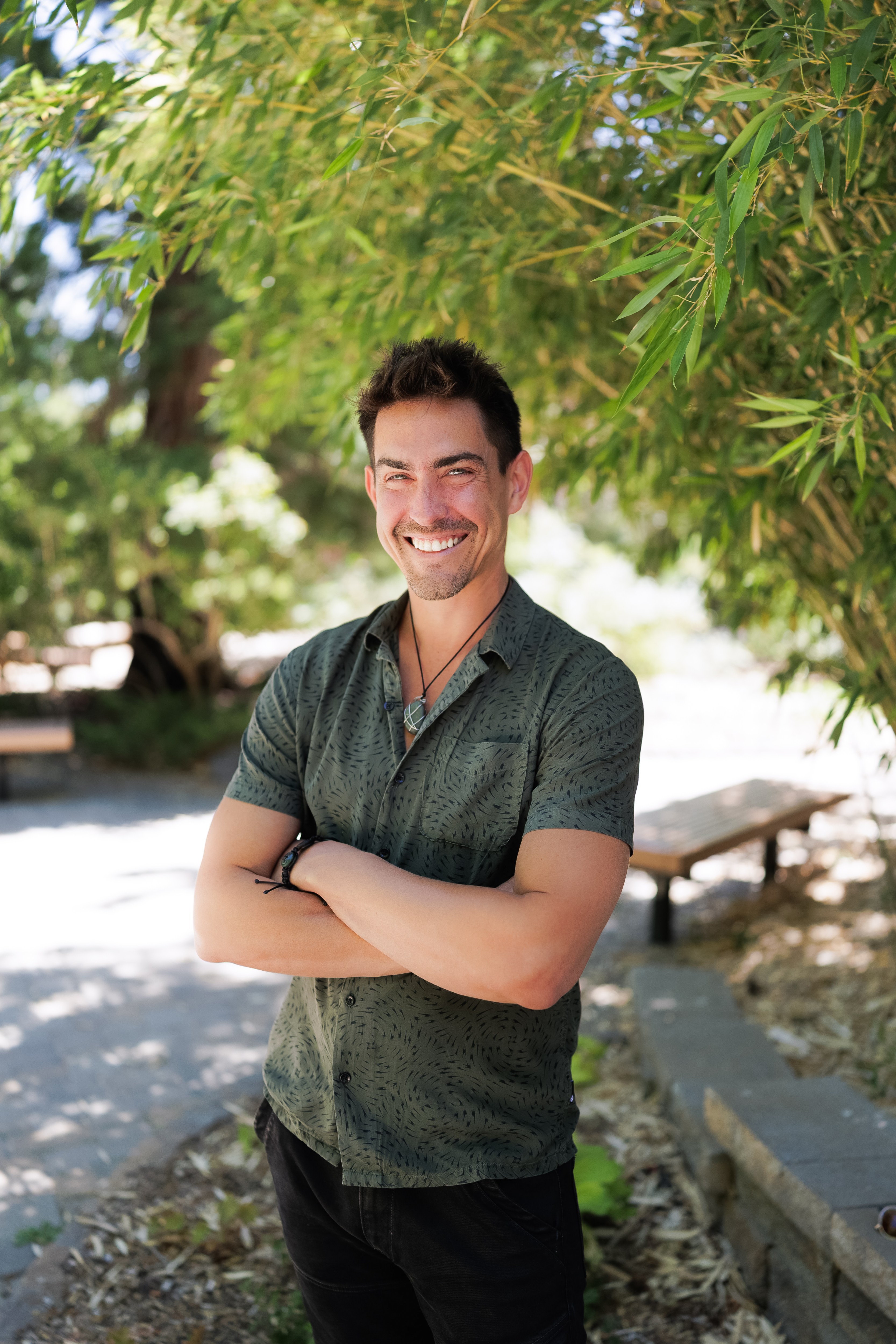
I’m Chris, a compassionate, clear-sighted facilitator, coach and guide. I’m a licensed natural medicine facilitator in Colorado, offering legal journeys, preparation, integration and coaching.
I bring a calm, rooted presence to our collaboration, and I want you to discover what it means to truly thrive.
I believe we have an intrinsic will to thrive but are sometimes unable to figure out the “how” on our own. Growth and healing are hard. Psychedelics can crack open doors we thought were locked, or maybe didn’t even notice were there.
I work with people navigating:
- high-functioning substance use
- tech addiction
- burnout
- AI anxiety
- major life transitions
- leadership challenges
- creative uncertainty
- inter-generational patterns
- questions of purpose
I’m a medical anthropologist by training, having studied addiction and psychoanalysis among the Indigenous Qom of Argentina. Most recently I worked for Google DeepMind adapting Gemini’s personality to cultures beyond the US. My approach is simultaneously spiritually-oriented and rigorous.
My approach is trauma-informed, and deeply individualized. My own struggles fuel my empathy. Together, we explore your circumstances, identify what is asking to change, and develop a path forward grounded in your own experience, values and relationships.
I believe we can get you unstuck.
If this approach resonates with you, I would love to hear what you’d like us to do together.
I’m Chris, and I specialize in using psychedelics to help men grow, reconnect, overcome, create, expand and become more fully themselves. Psychedelics (psilocybin) are integral in my process because they help loosen the rigid hold of the past, destabilize habits that have become maladaptive, and create durable change en route to future possibility.
In my doctoral research, I studied how talk-only psychological care can undermine healing. But more importantly, I am drawn to this work because I have been there. Psychedelics have been integral in helping me through complex childhood trauma, addiction and persistent depression where little else did. I’d be honored to walk the same healing path with you.
Our work follows three connected stages: preparation to clarify your intentions and establish trust; the journey itself, with attentive support; and integration to explore what the experience means and how to carry it into everyday life. You can also work with me on preparation or integration for an experience undertaken elsewhere.
Preparation
A psychedelic journey can be one of the least predictable experiences of your life. I believe that’s a good reason to take preparing for it seriously: to learn what you may encounter, understand the risks and give thoughtful attention to what you hope will change.
We’ll explore what brings you here, what’s happening in your life and what you feel ready to work with. We’ll review your health history and medications, identify where additional professional guidance may be needed, and talk openly about the possibilities and limitations of this work. There’s room for curiosity, apprehension and questions you might feel awkward asking.
I think of intention setting as creating the sandbox in which exploration can happen. Giving attention to a question, a relationship or a pattern you’re ready to understand helps establish the territory you’re entering. Within that space, there’s room to play, discover and be surprised. We’ll work toward meaningful intentions while holding them lightly enough to let the experience unfold.
Together, we’ll discuss what the experience can feel like and practice ways to meet uncertainty or difficult emotions. We’ll establish boundaries around support, touch and consent, and plan for getting home safely and making space afterward to rest and reflect.
Research supports taking this time. A 2026 analysis of 12 clinical trials involving 733 participants found that more preparation hours were associated with greater reductions in depressive symptoms, although it could not establish causation. My aim is to help you enter feeling informed, supported and connected to your reasons for being there.
The Journey
The journey is the main event. It’s the experience you’ve been preparing for, and it deserves the care and attention that something potentially life-changing asks of us. It can be beautiful, strange, challenging or unexpectedly quiet.
Part of its potential, as I understand it, is the loosening of the moorings that hold our usual ways of thinking and operating in place. Familiar stories about who we are, what we need and what we’re capable of can become less fixed.
Early research on psilocybin suggests it can reduce confidence in negative beliefs about ourselves. Put more plainly, I think a journey can make us less likely to buy our own bullshit. We may recognize a well-rehearsed excuse, question an old certainty or find tenderness where we usually meet ourselves with judgment. A powerful feeling of truth is something to explore, not an obligation to act.
The mental health benefits reported in clinical trials have generally been studied with preparation, supervised sessions and follow-up support. We cannot assume that taking the medicine without that surrounding care offers the same benefits. My commitment is to the whole process.
As an anthropologist, I also take seriously the contexts in which these medicines have traditionally been used. In many Indigenous healing traditions, the experience is embedded in ceremony, guided by experienced practitioners and connected to community life. That informs my belief that how we enter, accompany and return from an experience deserves as much care as the medicine itself.
We’ll begin by settling into the space and revisiting your intentions and our agreements. There will be room for a sense of occasion that feels authentic to you and your beliefs.
Throughout the journey, I’ll remain present and attentive to your wellbeing. There may be quiet, conversation or moments when you need reassurance and help finding your bearings. I’ll support your exploration while respecting your autonomy. You don’t need to perform or produce an insight.
As the effects ease, we’ll allow time for rest and reorientation, check how you’re feeling and review your plans for getting home safely. You’ll know what support comes next.
Integration
Integration is the ongoing process of making sense of a psychedelic experience and exploring how it belongs in the life you return to. You may come away with a sense of possibility, a difficult question or something you can feel but haven’t yet found words for.
I think taking a journey medicine without integration is a little like taking creatine, never going to the gym and then wondering why the gains don’t materialize. In my view, the possibilities opened by the experience deserve our participation afterward. That work can be gentle, creative and surprisingly ordinary.
We’ll begin wherever you are, with room for what felt beautiful, confusing, disappointing or unfinished. Together, we’ll explore the emotions, images and bodily sensations that stayed with you and how they connect with your life. I bring curiosity to symbols and spiritual questions while leaving space for your own understanding. Something can be meaningful before you know exactly what to make of it.
Research suggests psychedelics may offer a period of increased neuroplasticity, the brain’s capacity to adapt and learn. Human studies have found increased cognitive flexibility after psilocybin therapy, although the strongest evidence for a distinct learning window comes from animal research. Its timing and implications for human behavior change are still being established.
My approach is to make thoughtful use of that possible opening. We’ll choose manageable changes, practice new responses and give repetition a chance to help them take hold. That might mean setting a boundary, returning to creative work or making more room for rest. You don’t have to reorganize your entire life around what felt clear in a single afternoon.
I believe integration also happens through connection: time in nature, making something with your hands, being with people who know you and finding ways to contribute. I’m interested in how your experience finds expression in the way you care for yourself and participate in the world.
We’ll pay attention to your sleep, mood and ability to manage everyday life. If you’re unsettled or overwhelmed, we’ll focus on steadiness and identify any additional professional support you need. Integration can unfold over weeks or months; my role is to accompany that process with warmth, discernment and practical support.